
by Eduardo Queiroz Marques, Universidade Federal Rural da Amazônia (UFRA)
Hello, my name is Eduardo, and I am a scientist in the Brazilian Amazon. In 2022 I visited Switzerland and Germany for eight months while doing my PhD research which focused on understanding the effects of historical compound heavy precipitation and extreme wind speed on the structure of Amazonian forests.
In 2021, when presented with the opportunity to undertake an international internship, I found myself immersed in a period of discouragement due to social isolation and the losses resulting from the COVID-19 pandemic. This global crisis, exacerbated by anti-science policies in Brazil, contributed to a challenging environment as a doctoral candidate. An internship at the Federal Institute of Technology in Zurich (ETHZ) in Switzerland and at the Helmholtz Centre for Environmental Research (UFZ) in Germany was exactly what I needed to boost my motivation for scientific research.
The transition to ETH Zurich and UFZ provided a refreshing change of perspective. In my first experience outside of Brazil, I realized that scientific practice in Europe presented more accessible challenges. This perception fueled my commitment, leading me to envision the possibility of returning to Brazil with a substantial chapter on extreme compound climate events after just eight months, complete with analyses and consolidated results.
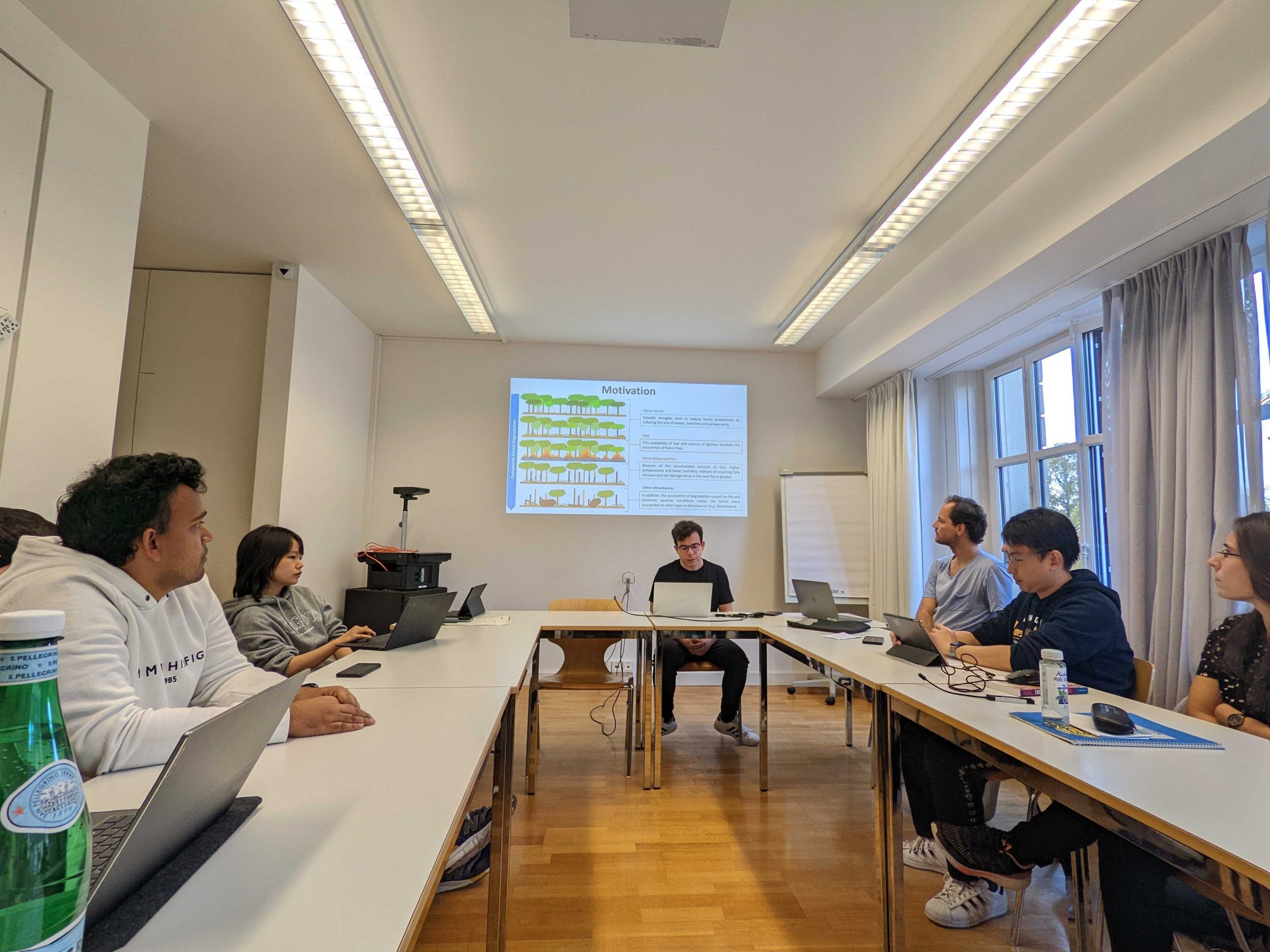
During my stays at the research groups of Dr. Sonia I. Seneviratne at ETHZ and Dr. Jakob Zscheischler at UFZ, both internationalized, multicultural, and multidisciplinary groups, I built essential connections and friendships that not only helped me develop my research but also facilitated my adaptation. Today, I remember everyone with great affection.
During my international journey, the DAMOCLES conference in Lisbon was a crucial highlight. It served as a platform for presenting my research (https://doi.org/10.13140/RG.2.2.12811.16169), facilitating a profound exchange of knowledge with experts. The lectures offered valuable insights, while interactive sessions challenged and refined my ideas. Engaging with other researchers showcased diverse approaches to complex climate events, enriching my scientific perspective and contributing to my doctoral research development.
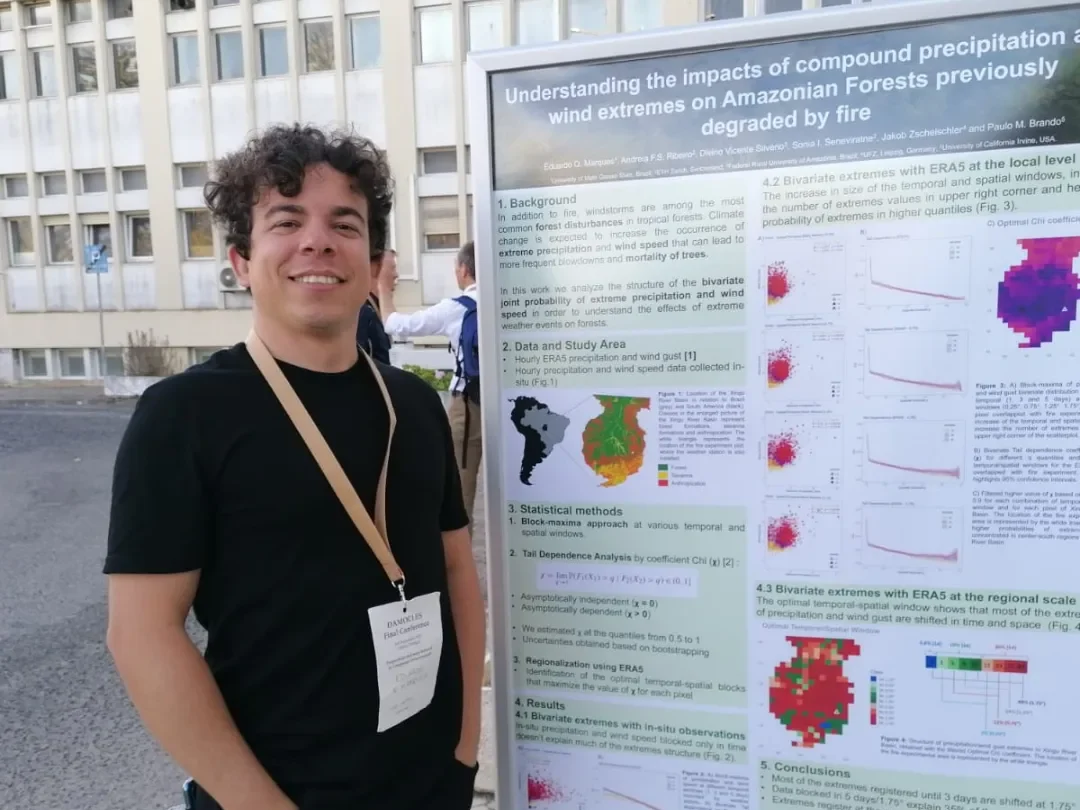
As a postdoctoral researcher in the Amazon, the importance of my stay at ETHZ and UFZ becomes evident in the depth and scope of my research. The experience gained in Europe not only expanded my scientific understanding but also provided a solid foundation for investigating compound climate events and their impacts on the Amazon rainforest. Participation in the DAMOCLES conference not only enriched my academic repertoire but also solidified my position as a committed researcher, ready to face the unique environmental challenges presented by the Amazon region. This trajectory is not merely a continuation of my work but a vital contribution to advancing scientific understanding and practical application in preserving the Amazon.
Edited by Andreia Ribeiro and Christoph Sauter. Photo credits: Paulo Brando (top), Lily-Belle Sweet (centre) and Andreia Ribeiro (bottom).
