
Guest Blog by Meriem Krouma – Uppsala University (Sweden), Vrije Universiteit Amsterdam (Netherlands)
Societies are increasingly exposed to events where multiple hazards occur simultaneously, in close succession, or across connected regions. Heat and drought, wind and heavy precipitation, or cold spells and storms can interact in ways that amplify impacts. These events, known as compound climate extremes, can overwhelm infrastructure, emergency response systems, food and energy networks, and public health services. Understanding them is therefore not only a scientific challenge, but also a societal necessity.
Much progress has been made in identifying and attributing compound events, but their predictability remains less well understood. Many studies document how such events affect society after they occur, yet an important frontier is to understand the atmospheric mechanisms that make them more or less predictable in advance. This requires moving beyond single hazards and studying the dynamics that connect different extremes in space and time.
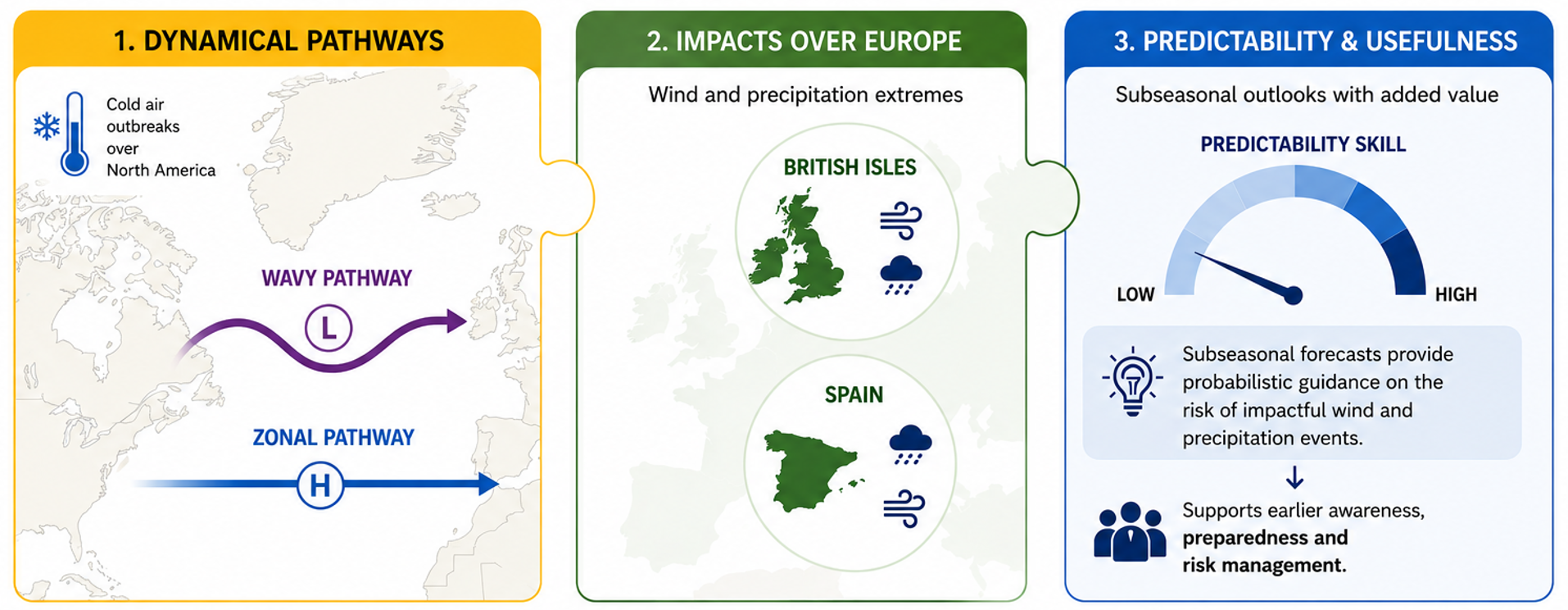
Figure 1 – Schematic illustrating the dynamical pathways behind pan-Atlantic compound extremes.
In our recent paper Krouma and Messori (2026), we investigate a type of compound event linking cold spells over eastern North America with wet and windy conditions over Western Europe. These pan-Atlantic extremes show how the atmosphere can connect distant regions through large-scale circulation patterns. A disruption on one side of the Atlantic may be part of a broader dynamical pathway leading to impacts elsewhere.
We focus on the dynamical drivers and predictability of these events. Compound extremes are often difficult to anticipate because they emerge from interactions between atmospheric waves, circulation regimes, persistence, and sometimes stratospheric conditions. By combining dynamical-systems indicators with ensemble reforecasts, we assess whether the atmospheric states leading to these events are intrinsically more or less predictable.
Our results show that different dynamical pathways have different levels of predictability. The zonal pathway appears more persistent and potentially more predictable than the wavy pathway, although both remain challenging compared with average winter conditions. This highlights an important message: not all extremes are equally predictable, and understanding their dynamics can help identify windows of opportunity for earlier warnings.
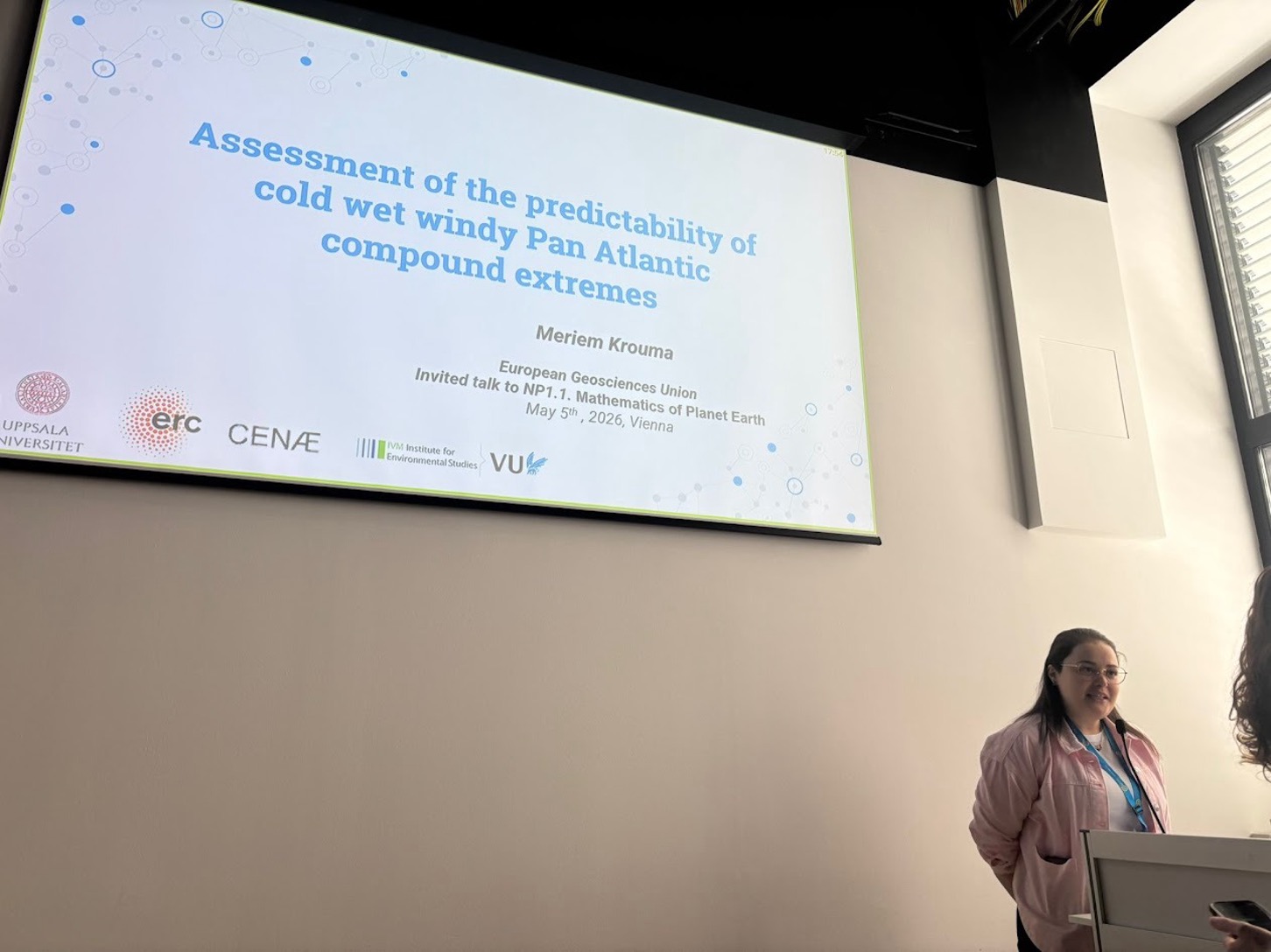
Figure 2 – Meriem presenting the paper Krouma and Messori (2026) at EGU26 as invited speaker by NP1.1.
Improved predictability of compound events can help us move from reacting to impacts after they occur towards anticipating when and where cascading risks may arise. This can support decisions in disaster preparedness, infrastructure management, energy planning, agriculture, and public health.
References
Krouma, M., & Messori, G. (2026). Predictability assessment of cold–wet–windy pan-Atlantic extremes. Weather and Climate Extremes, 52, 100903. https://doi.org/https://doi.org/10.1016/j.wace.2026.100903
